
Deep Conditioning for Curly Hair at Studio 285: Fix Dry Curls
Curly hair stays dry because its structure and porosity make moisture harder to retain. Regular conditioner softens briefly but does not seal hydration or repair the cuticle. Deep conditioning treatments penetrate the hair, restore elasticity, reduce frizz, and help curls hold moisture longer. Choosing the right formula, using correct techniques, and maintaining proper moisture–protein balance are essential. When dryness or damage is severe, professional salon hair treatments provide deeper repair and longer-lasting results.
This blog explores why curls stay dry, how deep conditioning actually works, and how to fix dryness properly using the right methods, ingredients, and professional guidance.
Why Curly Hair Stays Dry
The Natural Structure of Curly Hair
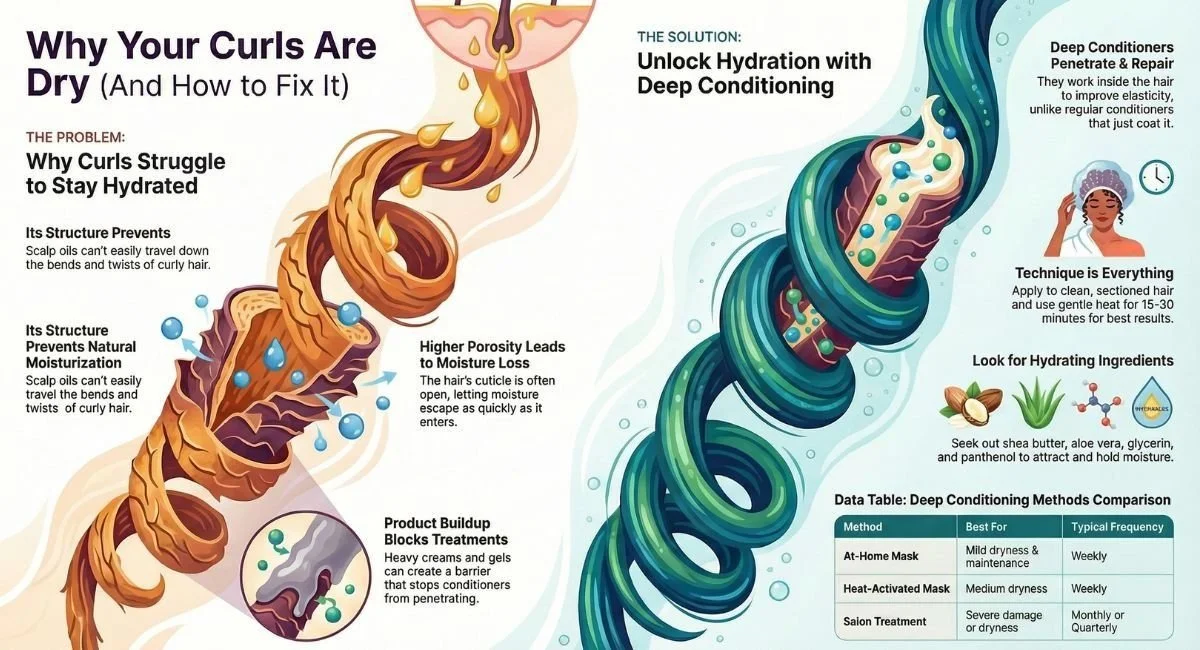
Curly hair has bends and twists that make it harder for natural oils from the scalp to travel down the hair shaft. Unlike straight hair, where oils move easily from root to tip, curls create obstacles that leave the mid-lengths and ends dry. This is one of the main reasons curly hair needs extra moisture support.
Higher Porosity in Many Curl Types
Many people with curls have medium to high porosity hair, meaning the cuticle is more open. While this allows moisture to enter easily, it also escapes quickly. Without sealing treatments, curls lose hydration faster, leading to dry curly hair that feels rough or brittle.
Environmental and Lifestyle Stress
Sun exposure, humidity, pollution, and hard water all strip moisture from curls. Heat styling tools and frequent washing also weaken the cuticle, making it harder for curls to retain hydration over time.
Product Buildup Blocking Moisture
Using heavy creams, oils, and gels without proper cleansing can create buildup. This layer prevents moisture treatments for curly hair from penetrating the strand, making curls feel dry even after conditioning.
Chemical and Mechanical Damage
Coloring, relaxing, excessive heat, and rough detangling damage the cuticle. Once damaged, the hair struggles to hold moisture, leading to frizzy curly hair and breakage.
How Deep Conditioning Works for Curly Hair
What a Deep Conditioning Treatment Actually Does
A deep conditioning treatment penetrates deeper than regular conditioners. It softens the hair fiber, improves elasticity, and smooths the cuticle. This helps curls retain moisture for longer periods rather than providing short-term softness.
Difference Between Regular Conditioner and Deep Conditioner
Regular conditioners mainly coat the surface of the hair for slip and detangling. A deep conditioner for curly hair contains richer emollients, humectants, and sometimes proteins that work internally to strengthen and hydrate.
The Role of Heat and Time
Gently heating the cuticle allows ingredients to absorb more effectively. Leaving a deep conditioning treatment on for 15 to 30 minutes improves results, especially for dry or damaged curly hair.
Moisture vs Protein Balance
Curls need moisture to stay soft, but excessive moisture without sufficient strength can cause limpness. Protein helps reinforce the hair structure. A good deep conditioning routine balances both, depending on hair needs.
How Deep Conditioning Reduces Frizz
When the cuticle is smooth and hydrated, curls reflect light better and resist humidity. This reduces frizzy curly hair and improves curl definition naturally.
Choosing the Right Deep Conditioner for Curly Hair
Ingredients That Truly Hydrate
Look for ingredients like shea butter, aloe vera, glycerin, panthenol, and fatty alcohols. These attract and hold moisture within the hair fiber, making them ideal for a moisture treatment for curly hair.
Ingredients to Use Carefully
Silicones, drying alcohols, and heavy waxes can block moisture if not removed properly. These ingredients may offer temporary smoothness but worsen dryness long-term.
Matching Conditioner to Hair Porosity
Low porosity curls benefit from lightweight formulas and heat application. High porosity curls need richer creams and sealing ingredients to lock moisture in.
Protein-Free vs Protein-Rich Treatments
Protein-free deep conditioners work well for hair that feels stiff or brittle. Protein-rich options help damaged curly hair regain strength after chemical or heat stress.
When Professional Products Make a Difference
Salon-grade deep conditioners often use higher concentrations of active ingredients. These can provide faster and more noticeable results than drugstore options.
How Often Should You Deep Condition Curly Hair
Weekly Deep Conditioning for Most Curl Types
Most curls benefit from a deep conditioning treatment once a week. This maintains hydration and elasticity without overloading the hair.
Adjusting Frequency for Damaged Curly Hair
If hair is severely dry or damaged, deep conditioning twice a week may be helpful temporarily. Once hair improves, frequency should be reduced.
Signs You Are Over-Conditioning
Hair that feels mushy, limp, or overly soft may be over-conditioned. Reducing frequency or adding light protein can restore balance.
Seasonal Changes and Conditioning Needs
Curls often need more moisture in winter and lighter treatments in humid summers. Adjust routines based on climate and lifestyle.
Listening to Your Hair
Pay attention to texture, elasticity, and breakage. These signs guide how often deep conditioning is truly needed.
Professional vs At-Home Deep Conditioning
Benefits of At-Home Treatments
At-home deep conditioning is convenient and cost-effective. It works well for maintenance and mild dryness when done consistently.
When a Salon Hair Treatment Is Better
A professional hair treatment penetrates deeper and often includes steam, infrared heat, or specialized formulas that repair severely damaged curly hair.
Long-Term Results of Professional Treatments
Salon treatments often deliver longer-lasting softness, improved curl pattern, and reduced breakage when combined with proper home care.
Combining Both for Best Results
Using salon hair treatment sessions quarterly and maintaining results at home offers the best balance of care and convenience.
Choosing the Right Salon for Curly Hair
Look for professionals experienced with curls. Proper diagnosis and technique make a significant difference in treatment outcomes.
Common Deep Conditioning Mistakes to Avoid
Applying on Dirty Hair
Deep conditioners work best on clean hair. Buildup blocks absorption and reduces effectiveness.
Skipping Sectioning
Applying product without sectioning leads to uneven results. Some curls stay dry while others become over-conditioned.
Rinsing Too Quickly
Rinsing off a deep conditioner too soon limits its benefits. Time and patience matter.
Using the Wrong Temperature
Extremely hot water can strip moisture. Lukewarm water followed by a cool rinse helps seal the cuticle.
Ignoring Aftercare
Without leave-in conditioners or proper styling products, moisture escapes quickly, undoing the benefits of deep conditioning.
Deep Conditioning Methods Comparison
| Method | Best For | Results | Frequency |
|---|---|---|---|
| At-Home Mask | Mild dryness | Softness, slip | Weekly |
| Heat-Activated Mask | Medium dryness | Better penetration | Weekly |
| Salon Hair Treatment | Severe damage | Repair, elasticity | Monthly or quarterly |
| Protein Treatment | Weak curls | Strength | As needed |
Signs Your Curls Need a Deep Conditioning Treatment
| Sign | What It Means | Solution |
|---|---|---|
| Excessive frizz | Cuticle damage | Moisture treatment |
| Breakage | Weak strands | Protein + moisture |
| Dull appearance | Dehydration | Deep conditioner |
| Tangling | Rough cuticle | Slip-rich treatment |
Key Takeaways
Curly hair stays dry due to its structure, porosity, and difficulty retaining moisture
A deep conditioning treatment works by repairing, softening, and sealing the hair cuticle
Not all moisture treatments for curly hair are the same; ingredients and technique matter
Overuse or incorrect use of conditioners can worsen dry curly hair
Professional hair treatment options can restore severely damaged curly hair more effectively
Consistency and proper aftercare are essential for lasting hydration and curl health
Final Thoughts
Deep conditioning is not just an optional step for curly hair; it is essential for maintaining healthy, hydrated, and defined curls.
Dryness happens because curls struggle to retain moisture, not because they lack products. When you understand your hair’s structure, porosity, and damage level, you can choose the right deep conditioner for curly hair and use it correctly.
Consistent care, proper techniques, and occasional professional hair treatment sessions can transform dry, frizzy, or damaged curly hair into soft, resilient curls that hold moisture longer and look healthier over time.
Treat deep conditioning as a long-term investment rather than a quick fix, and your curls will show the difference.
Experience a customised professional hair treatment at Studio 285 and give your curls the deep conditioning care they truly need.
FAQs
1. How often should I use a deep conditioner for curly hair?
Most people should deep condition once a week. Severely dry or damaged curly hair may need it twice weekly for a short period.
2. Can deep conditioning fix damaged curly hair permanently?
Deep conditioning improves moisture and elasticity, but severe damage may require regular treatments and trimming for full recovery.
3. Is a salon hair treatment better than at-home deep conditioning?
Salon treatments provide deeper penetration and longer-lasting results, especially for highly damaged or chemically treated curls.
4. Why does my hair still feel dry after deep conditioning?
Possible reasons include buildup, wrong product choice, lack of heat, or missing leave-in and sealing steps.
5. What is the best moisture treatment for curly hair?
The best treatment depends on hair porosity and damage level, but formulas with humectants, emollients, and balanced proteins work best.
