
What is colour correction, and how does it work
Colour correction is the process of fixing unwanted tones, uneven shades, orcolourr mistakes to achieve a balanced, natural-looking result. In simple terms, it works by neutralising problem colours and rebuilding the hair colour in a controlled, professional way.
Whether hair has turned brassy, too dark, patchy, or completely different from what was expected, color correction offers a structured solution instead of a quick cover-up.
Hair color mistakes happen more often than people think. Box dyes, faded salon color, over-toning, chlorine exposure, or even sun damage can all throw hair color off balance.
This is where professional color correction comes in. It is not just about changing color again, it is about understanding color theory, hair history, and chemistry to restore harmony to the hair.
This blog explains what color correction is, how it works step by step, when it is needed, and why professional expertise makes all the difference.
Key Takeaways
Color correction fixes unwanted tones, uneven color, and hair color mistakes.
It works by neutralizing colors using professional color theory techniques.
Hair color correction is customized based on hair history and condition.
Brassy hair color correction requires precise toning and balance.
A professional color correction service protects hair health while fixing color.
Results often take time and multiple steps for safe, long-lasting outcomes.
Understanding Color Correction
What Is Color Correction in Hair Care?
Color correction is a specialized hair coloring process used to fix mistakes or unwanted results from previous color services. This can include hair that is too orange, yellow, green, muddy, too dark, or uneven from root to ends. Unlike a standard coloring appointment, color correction focuses on repairing and rebalancing the hair’s color foundation.
Hair color correction is often more complex than regular coloring because the hair already contains artificial pigment. Stylists must work carefully to adjust tone without causing damage. This is why color correction services are typically longer and more detailed.
Why Hair Color Goes Wrong
Hair color can go wrong for many reasons. At-home dyes are a common cause, especially when box color is layered repeatedly. Overlapping salon services, incorrect developer strength, mineral buildup, and fading over time also affect color results.
Even natural factors like sun exposure and hard water can shift hair color. Blonde hair may turn brassy, dark hair may look dull or red, and vibrant shades may fade unevenly. Color correction addresses these issues by targeting the root cause, not just the visible problem.
The Role of Color Theory
Color theory is the foundation of all color correction. Stylists use the color wheel to neutralize unwanted tones. For example, purple cancels yellow, blue cancels orange, and green cancels red.
Understanding how pigments interact allows professionals to correct color without making it worse. This is especially important in brassy hair color correction, where over-toning can easily lead to flat or muddy results.
Difference Between Color Correction and Regular Coloring
Regular hair coloring applies color to virgin hair or refreshes existing color. Color correction, on the other hand, fixes problems before applying the desired shade. It often involves removing or neutralizing pigment first, then rebuilding the color.
Because of this, color correction services require more time, expertise, and customization. It is never a one-size-fits-all process.
Who Needs Color Correction?
Anyone unhappy with their current hair color may need color correction. This includes people with uneven highlights, overly dark dye jobs, faded reds, greenish blondes, or patchy results.
Hair color correction is also common for clients transitioning from box dye to salon color or making a dramatic color change safely.
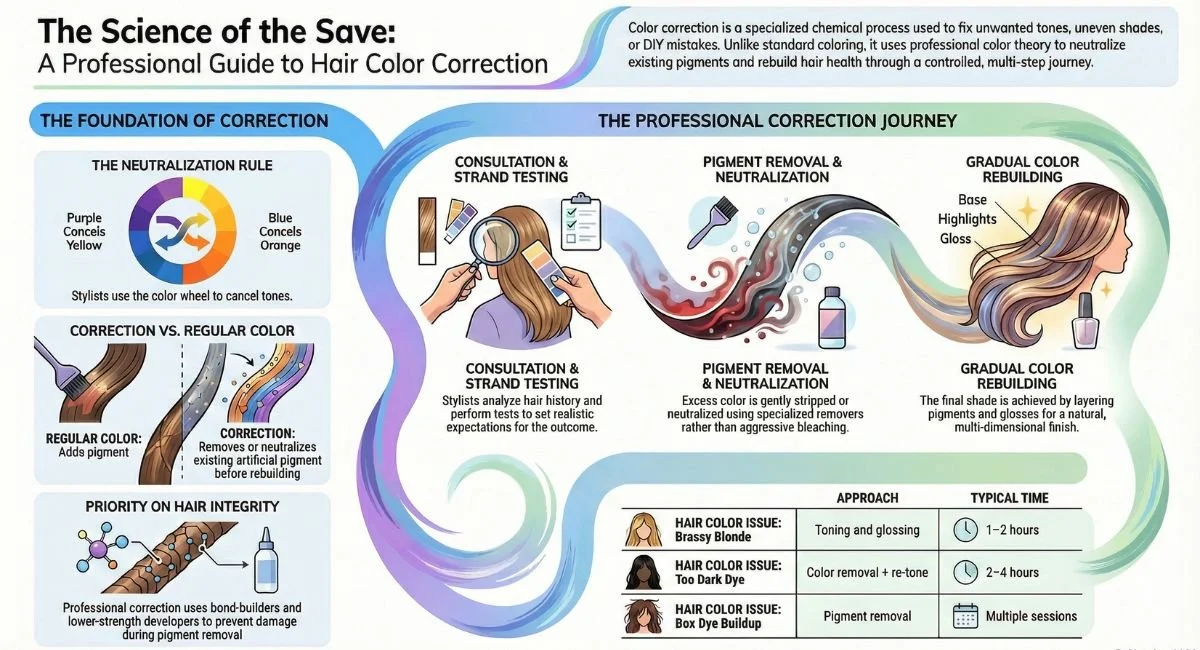
How Color Correction Works Step by Step
Consultation and Hair Analysis
Every color correction service starts with a detailed consultation. The stylist evaluates hair history, previous dyes, chemical treatments, and current condition. This step determines what is possible and how to achieve it safely.
Photos, strand tests, and honest conversations help set realistic expectations. Color correction is a journey, not a quick fix.
Identifying Unwanted Tones
The next step is identifying the exact unwanted tones. Is the hair orange, yellow, red, green, or gray? Each issue requires a different approach.
For example, brassy hair color correction focuses on neutralizing warm tones without darkening the hair too much. Precision is key here.
Removing or Neutralizing Pigment
Depending on the issue, the stylist may remove excess pigment using professional color removers or lighteners. In other cases, neutralization through toning is enough.
This step must be done carefully to avoid damage. Hair color correction prioritizes hair integrity over speed.
Rebuilding the Desired Color
Once unwanted tones are addressed, the stylist rebuilds the target color. This may involve multiple shades, glosses, or toners to create depth and balance.
Hair color fix techniques often include layering pigments gradually rather than applying one flat color.
Aftercare and Maintenance Plan
Color correction does not end at the salon chair. Proper aftercare is essential to maintain results. Stylists recommend sulfate-free shampoos, toning products, and regular gloss appointments.
Common Types of Hair Color Correction
Brassy Hair Color Correction
Brassiness is one of the most common issues, especially in blonde and lightened hair. It appears as yellow, orange, or copper tones caused by underlying pigment exposure.
Brassy hair color correction uses toners and color theory to neutralize warmth while maintaining brightness. The goal is balance, not dullness.
Fixing Overly Dark Hair
Hair dyed too dark can feel heavy and unnatural. Color correction in this case often involves gentle pigment removal followed by re-toning.
A hair color fix for dark dye takes time, especially if multiple layers of color are present.
Correcting Uneven or Patchy Color
Uneven color can result from improper application or overlapping dyes. Color correction evens out these inconsistencies by filling gaps and blending transitions.
This type of correction often requires multiple formulas applied strategically.
Removing Unwanted Fashion Colors
Bright colors like blue, green, or pink can fade unpredictably. Color correction services help safely remove or transition these shades into more natural tones.
Professional products are essential to avoid staining or damage.
Transitioning from Box Dye to Salon Color
Box dye leaves behind stubborn pigments. Hair color correction helps strip unwanted tones and create a clean base for professional color.
Tools and Techniques Used in Color Correction
Professional Color Removers
Color removers break down artificial pigment without lightening natural hair too aggressively. They are often used before re-coloring.
These tools are safer than repeated bleaching when used correctly.
Toners and Glosses
Toners refine color by neutralizing unwanted hues. Glosses add shine and enhance tone without long-term commitment.
Both are essential in color correction for achieving polished results.
Lighteners and Developers
Lighteners are used when pigment removal is necessary. Developer strength is carefully chosen to protect hair health.
Precision matters more than power in hair color correction.
Strand Testing
Strand tests predict how hair will react to treatments. They help avoid surprises and guide the correction process.
This step is critical for complex corrections.
Bond-Building Treatments
Modern color correction services often include bond builders. These protect and repair hair during chemical processes.
Cost, Time, and Expectations
Why Color Correction Takes Time
Color correction can take several hours or multiple sessions. This ensures hair remains healthy while achieving the desired result.
Rushing the process increases the risk of damage and uneven color.
Factors That Affect Cost
Cost depends on hair length, density, color history, and complexity. A simple toner fix costs less than full pigment removal and rebuild.
Professional color correction service pricing reflects time, skill, and product quality.
Realistic Results vs Expectations
Not all corrections can be completed in one visit. Some colors require gradual transitions.
Honest expectations lead to better satisfaction.
Common Color Issues and Solutions
| Hair Color Issue | Correction Approach | Typical Time |
|---|---|---|
| Brassy blonde | Toning and glossing | 1–2 hours |
| Too dark dye | Color removal + re-tone | 2–4 hours |
| Patchy color | Sectional correction | 3–5 hours |
| Box dye buildup | Pigment removal | Multiple sessions |
Importance of Professional Expertise
DIY fixes often worsen the problem. Professional stylists understand chemistry, structure, and long-term hair health.
A salon-based hair color fix is safer and more predictable.
Choosing the Right Color Correction Service
Why Professional Services Matter
Color correction requires advanced training. Professionals know how to correct without compromising hair integrity.
This is especially important for fragile or previously damaged hair.
Consultation Is Non-Negotiable
A proper consultation ensures the stylist understands the problem and the goal. It also builds trust and transparency.
Never skip this step.
Customization Over Formulas
No two corrections are the same. Custom formulas ensure balanced, natural-looking results.
This approach separates expert services from quick fixes.
Maintenance Support
The best color correction service includes guidance for at-home care and future appointments.
Long-term success depends on maintenance.
When to Avoid Immediate Correction
If hair is severely damaged, treatment may be recommended before correction. Healthy hair comes first.
Final Thoughts
Color correction is both a science and an art. It goes beyond simply changing hair color and focuses on restoring balance, tone, and confidence. From brassy hair color correction to full hair color fixes, the process requires expertise, patience, and a deep understanding of color theory. When done professionally, color correction not only fixes mistakes but also improves hair health and longevity of color. Choosing the right color correction service ensures results that look natural, feel healthy, and last longer.
Ready to transform your hair with expert care? Book a professional color correction service at Studio 285 and let skilled stylists restore your perfect shade.
FAQs
-
Color correction works by neutralizing or removing unwanted tones and rebuilding the desired color using professional techniques based on color theory.
-
When done professionally, hair color correction prioritizes hair health and often includes bond-building treatments to minimize damage.
-
It can take anywhere from one session to multiple visits, depending on hair history and the correction needed.
-
Yes, brassy hair color correction often uses toners and glosses without bleaching, depending on the severity.
-
Costs vary based on complexity, length, and time required. A consultation provides the most accurate estimate.
